
Boat
Ship
This article is about vessels for marine navigation. For other meanings, see “Ship (disambiguation).”
“Zhōu” (舟) redirects here. For the Chinese character radical, see “Radical 137” (舟).
The giant passenger liner *Queen Mary 2*
“Ship” or “vessel” is a general term for watercraft. It refers broadly to any vehicle that utilizes water’s buoyancy and moves across the water’s surface through propulsion—generated by human power, sails, or engines (such as steam engines, gas turbines, diesel engines, electric motors, or nuclear power) driving propellers, fans, or high-pressure nozzles—or through actions like rowing, towing, pulling, or pushing. In Chinese, civilian vessels are commonly referred to as *chuán* (船), *chuánbó* (船舶), *lúnjī* (轮机), or *fǎng* (舫); military vessels are called *jiàn* (舰); and small vessels are called *tǐng* (艇)—with small, non-motorized vessels known as *zhōu* (舟), *fá* (筏), or *shānbǎn* (舢舨)—collectively referred to as *jiàntǐng* (舰艇).
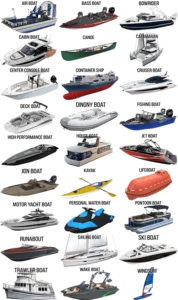
Vessels have evolved alongside human development, appearing in both wartime and peacetime contexts. Millions of fishermen worldwide use fishing vessels to catch fish. Naval warfare and maritime military logistics both rely on ships. In 2007, there were approximately 35,000 merchant ships transporting about 7.4 million tons of cargo [1]. By 2011, approximately 104,304 vessels worldwide had obtained an IMO identification number issued by the International Maritime Organization (IMO) [2].
Throughout world history, ships have played a crucial role in geographical exploration and the advancement of science and technology. The Columbian Exchange between the Americas and Europe was a major factor in global population growth during that era [3]. Maritime shipping has also shaped the global economy into an energy-intensive system. Currently, the longest ship in the world is Shell’s *Prelude FLNG* [citation needed].
Terminology
Main parts of a ship. 1: Funnel; 2: Stern; 3: Propeller and rudder; 4: Hull/Side; 5: Anchor; 6: Bulbous bow; 7: Bow; 8: Deck; 9: Superstructure
The distinction between a “ship” and a “boat” is usually based on size and duration of voyage.[4] A rule of thumb is that if a vessel can carry another vessel, the larger one is the ship.[5] However, there are exceptions: sailing yachts, for instance, may carry a small tender (2 to 6 meters long), yet neither is classified as a “ship” in the strict sense.
During the Age of Discovery, a “ship” was defined as a sailing vessel with at least three square-rigged masts and a full bowsprit; mast configurations were also used to define other vessel types, such as barques and brigs.
Many large vessels are commonly referred to as “boats”—submarines being the prime example.[6]
In maritime tradition, vessels usually have their own names; modern vessels may also belong to a specific class (often named after the first vessel of that class). In English, a ship is traditionally referred to as “she” or “her”[7][8], even if the name is masculine. However, this is not an absolute rule; some style guides use “it” to refer to ships.[9]
Classification
By Purpose
Trailing suction hopper dredger
Thai river vendor boat
Research vessel: A vessel used for conducting marine scientific research.
Engineering/Service vessel: A vessel used for maintenance and repair of other vessels, or for executing surface and underwater engineering projects.
Fishing vessel: A vessel used for commercial fishing.
Container ship: A vessel designed specifically to transport shipping containers.
Liquid cargo ship (Tanker): A vessel used to transport liquids (such as crude oil).
Passenger ship: A large vessel used to transport passengers.
Non-commercial vessel: A vessel not used for commercial purposes.
Speedboat: A vessel primarily used for water recreation or racing; this category includes motorboats and hovercraft.
Tugboat: A specialized vessel used to push or pull large ships into and out of port. Pilot boat: A specialized vessel used to transport pilots to and from merchant ships.
Channel marker boat: A vessel used to mark or indicate a navigation channel.
Icebreaker: A vessel designed to break through sea ice and clear a path for navigation.
Warship: A vessel used by the navy; this category includes combat service support vessels that do not engage directly in combat.
Surface combatant: A surface vessel that directly participates in naval combat engagements. Examples include cruisers, destroyers, frigates, corvettes, littoral combat ships, arsenal ships, missile boats, torpedo boats, and gunboats; retired types include capital ships such as battleships and battlecruisers.
Combat support vessel: A vessel that does not directly engage in combat but provides indirect fire support, intelligence, surveillance, or logistical support to other ships. Examples include aircraft carriers (which facilitate carrier-based aircraft operations to secure air superiority but do not engage in direct combat themselves—often remaining as far from the battlefield as possible), amphibious warships (such as amphibious assault ships, dock landing ships, and helicopter landing ships), command ships, coastal defense ships, minesweepers, landing craft, patrol boats, and auxiliary ships (such as replenishment ships and hospital ships).
Submarine: A specialized underwater vessel. They are categorized into attack submarines (primarily designed to attack other ships with torpedoes) and missile submarines (designed to strike distant land targets; these include ballistic missile submarines and cruise missile submarines).
Unmanned Surface Vehicles (USVs) and Unmanned Underwater Vehicles (UUVs): Unmanned vehicles used by the navy, typically for intelligence gathering, though they can also be used for surprise attacks or suicide missions against surface or near-shore targets.
Submersible: A small underwater vehicle typically used for tasks such as deep-sea scientific research, engineering, and maintenance; in the commercial sector, they are also used for activities like underwater sightseeing. By Material
Steel/iron ships
Wooden ships
Alloy ships
Ferrocement ships—using concrete to reduce steel consumption (e.g., the *Gutian*)
Glass-reinforced plastic (GRP) ships
By Structure
Monohull
Most common vessels are monohulls; aside from the hull itself, no other structures make contact with the water. To maintain stability amidst wind and waves, the hull usually features a protruding keel to minimize rolling.
Multihull
Some designs employ more than one submerged structure to counteract the rolling moments caused by wind and waves. Catamarans may feature an outrigger on one side for stability (similar to the training wheels on a child’s bicycle) or consist of two slender hulls connected by a main deck and shared superstructure. Trimaran designs feature an outrigger on each side of the main hull. These vessels can be powered by sails or water-jet propulsion systems (which generate forward thrust via reaction force from rearward water ejection); water jets offer higher speeds than conventional propellers, and the slender hulls of catamarans reduce drag at high speeds. They offer high stability and are resistant to capsizing (though if waves are extreme and the vessel rolls past 90 degrees, it lacks the self-righting moment inherent to monohulls and risks total inversion). They are frequently used for ferries and military transport.
Hydrofoil
Hydrofoils are vessels capable of high-speed travel. They feature struts extending from the bottom, fitted with hydrofoils resembling aircraft wings. As the vessel accelerates, the hydrofoils generate lift to raise the hull out of the water, thereby reducing drag and increasing speed. Steering is achieved not by a conventional rudder, but by adjusting the angle of attack of the port and starboard hydrofoils.
Hovercraft
Hovercraft are high-speed vessels that utilize a cushion of high-pressure air beneath the hull to support the craft, thereby minimizing contact with the water and reducing drag. Many hovercraft can reach speeds exceeding 50 knots (approximately 92.59 km/h).
By Propulsion Method
A large three-masted sailing ship
Human-powered vessels: Propelled by human effort using oars, sculls, poles, etc.
Sailing vessels: Propelled by wind acting on sails.
Motor-sailers: Dual-propulsion vessels using both wind and engines.
Motor vessels: Propelled by engines.
Barges: Non-powered vessels.
Electric vessels: Propelled by electric motors.
Nuclear-powered vessels.
Design Considerations
Hydrostatics
Main article: Hydrostatics
Vessels such as air-cushion landing craft can generate buoyancy without displacing liquid.
There are three reasons why a vessel can float on the water’s surface:
Most vessels are known as “displacement vessels”; their weight is balanced by the buoyant force generated by the water displaced by the hull.
For vessels with lifting surfaces—such as hydrofoils—lift is generated as speed increases and the vessel moves relative to the water; this lift grows until the vessel enters a “foiling” (hydrofoil-borne) state.
Non-displacement vessels, such as hovercraft, are supported by a cushion of high-pressure air generated by the craft itself, allowing it to maintain a clearance above the water’s surface.
A vessel achieves static equilibrium when the upward forces equal the downward forces. If the vessel sinks lower (increasing its draft), its weight remains constant, but the weight of the water displaced by the hull increases. When these forces balance, the vessel floats. It remains stable without pitching or rolling excessively, even if the cargo is not evenly distributed.
Vessel stability involves not only the aforementioned hydrostatic aspects but also dynamic factors—such as how the vessel behaves when subjected to external forces, rolling, pitching, wind, and waves. Poor stability can lead to excessive rolling and pitching, ultimately resulting in capsizing or sinking.
Hydrodynamics
Main article: Hydrodynamics
Fishing vessel *Dona Delfina*
As a vessel moves through the water, its leading surfaces encounter resistance. This resistance comprises several components, the primary ones being hull resistance (friction/viscous drag) and wave-making resistance. Reducing drag naturally leads to higher speeds; this requires minimizing the wetted surface area and shaping the non-submerged portions of the hull to generate waves with smaller amplitudes. To achieve this, high-speed vessels are typically slender and feature fewer or smaller appendages. Regularly cleaning the hull to remove marine growth and algae reduces drag, as does the use of antifouling paint. Advanced designs, such as bulbous bows, can also reduce wave-making resistance.
A simple way to understand wave-making resistance is to consider the relationship between the hull and the waves it generates. If the vessel’s speed is lower than the propagation speed of the waves, the waves dissipate rapidly along the sides of the hull. However, if the vessel’s speed matches the wave propagation speed, the rate of wave energy accumulation exceeds the rate of dissipation, causing the wave amplitude to increase. As the vessel must then cut through or ride over these waves, resistance rises exponentially with speed.
Here, L represents the length of the vessel at the waterline, measured in feet or meters.
When a vessel’s speed exceeds 94% of its hull speed, it begins to ride over the primary bow wave; the hull becomes somewhat stabilized, supported by the crests of two bow waves. When the speed exceeds 134% of hull speed, the wavelength surpasses the length of the hull itself; the bow wave can no longer support the stern, causing the stern to sink and the bow to rise. Consequently, the hull attempts to climb over the bow wave it has generated, leading to a rapid increase in resistance. Even if a displacement vessel could be operated at 134% of its hull speed, the fuel costs would be exorbitant. Most vessels operate at speeds well below these thresholds—typically under 100% of hull speed. Movement and rotation of a ship along three axes: 1. Heave, 2. Sway, 3. Surge, 4. Yaw, 5. Pitch, 6. Roll.
For large-scale projects with sufficient funding, resistance is tested using ship model basins or calculated via computational fluid dynamics (CFD).
Ships are also affected by waves and swells, as well as wind and weather conditions. These movements and rotations are undesirable for passengers and cargo alike and must be controlled whenever possible. To some extent, rolling can be stabilized using ballast or equipment such as fin stabilizers. Pitching is more difficult to limit; if the bow plunges into waves (a phenomenon known as “shipping water” or “diving”), it can create dangerous conditions. Sometimes, to halt violent rolling or pitching, a vessel must alter its course or come to a rapid stop.
Ship stability theory has been convincingly explained in 21st-century scientific research [10][11]; however, the stability of certain vessels can deteriorate rapidly due to “bifurcation memory” effects. Such vessels include highly maneuverable craft, aircraft designed to be unstable during steady-state flight, and controlled underwater vehicles (where these characteristics are required for specific applications). These factors must be managed when designing the vessel and its control systems for relevant operating conditions.
Buoyancy
See also: Buoyancy
A floating ship displaces a volume of fluid equal in weight to the ship itself. The density of the ship’s structure can exceed that of water, provided the structure contains sufficiently large hollow spaces. When a ship floats, the total mass of the vessel (including cargo) divided by the volume submerged below the waterline equals the density of water (1 kg/L). If additional weight is added to the ship, the submerged volume must increase to balance gravity and buoyancy, causing the ship to sink slightly deeper.
Anonymous
Hi, this is a comment. To delete a comment, log in and view the comments in your dashboard. Commenter avatars come from Gravatar.